
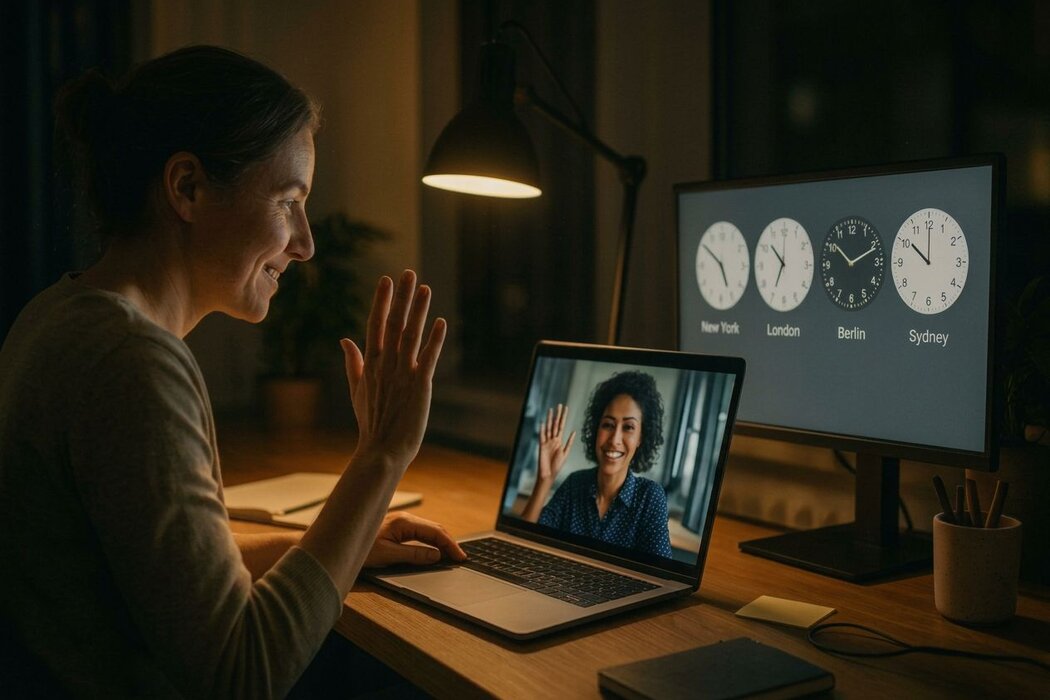
It’s 9 AM in Auckland. A developer just shipped a critical fix that unblocked the European team. By the time London wakes up, the PR is merged and forgotten. By the time San Francisco logs on, it’s ancient history. Nobody said thank you.
Not because nobody cared. Because nobody was awake.
This is the recognition gap that async-first teams face every single day. When your colleagues are spread across 6, 8, or 12 time zones, the natural moments for acknowledgment — the hallway high-five, the “nice work” across the desk, the spontaneous applause in a meeting — simply don’t exist. And if you don’t intentionally design recognition into your async workflows, it won’t happen at all.
The Async Recognition Deficit
Synchronous teams have a built-in advantage: proximity creates incidental recognition. A manager walking past a desk sees a finished deliverable and says “this looks great.” Colleagues overhear a tough client call and give a nod afterward. These micro-moments of acknowledgment happen naturally when people share physical or temporal space.
Async teams have none of this. What they have instead is:
- Written updates that get read hours later (if at all)
- Pull requests reviewed by people in different time zones
- Slack messages sent into the void, waiting for morning in another hemisphere
- Standup updates posted asynchronously with no real-time response
A Buffer survey found that 20% of remote workers struggle with loneliness, and 17% cite communication and collaboration as their biggest challenge. These numbers get worse as the time zone spread increases. When recognition falls through the cracks, isolation compounds.
Why “Great Job in the Meeting” Doesn’t Work Anymore
In synchronous cultures, recognition often happens verbally and in real-time. “Great presentation, Sarah.” “Thanks for jumping on that call, Dev.” These moments are fleeting but frequent.
Async teams can’t rely on this pattern. If you wait for a shared synchronous moment to recognize someone, you might wait a week. And by then, the moment has lost its emotional charge. Recognition that arrives three days late feels more like an afterthought than appreciation.
The solution isn’t to force more synchronous time (that defeats the purpose of async). The solution is to build recognition into the async artifacts your team already creates.
Five Strategies for Async Recognition
1. Recognize in the medium where work happens.
If your team communicates in Slack or Teams threads, that’s where recognition should live. Don’t save it for a weekly call. When you read a great update or review an excellent pull request, leave the recognition right there, right then. A Karma kudos in the same thread where the work was shared means the person sees it the moment they log on.
2. Create a “kudos” channel that works across time zones.
A dedicated #kudos or #shoutouts channel becomes a time-zone-agnostic recognition hub. Anyone can post recognition at any time. Others react when they see it, whenever that happens to be. Over a 24-hour cycle, a single kudos message can accumulate reactions from teammates around the world. This is asynchronous celebration in action.
3. Make written recognition the default.
In async teams, written recognition has a superpower: it persists. A spoken “good job” in a meeting evaporates. A written kudos in Slack stays there. The person can re-read it. Others can see it days later. It becomes part of the team’s record.
Write specifics: “Carlos, your API refactor cut our response time by 40%. That directly impacts customer experience. Thank you.” This kind of written recognition is more valuable than most verbal praise because it’s permanent, specific, and visible.
4. Use tools that aggregate and surface recognition patterns.
When recognition is scattered across channels and time zones, it’s easy for it to become invisible to leadership. Tools like Karma solve this by collecting peer recognition across all channels and surfacing it in dashboards and weekly digests. This means:
- Managers see who’s being recognized (and who isn’t) without reading every thread
- Team members get a weekly summary of kudos they received, even if the original message was posted while they slept
- Leadership gets data on recognition patterns across the organization
5. Establish a recognition rhythm, not just a reaction.
Don’t leave recognition to chance. Build it into your team’s cadence:
- Monday: Async prompt — “What’s one thing someone did last week that made your work easier?”
- Wednesday: Manager shares a specific shoutout in the team channel
- Friday: Automated digest of the week’s kudos (Karma’s weekly summary does this automatically)
This rhythm ensures that recognition happens predictably and consistently, regardless of time zones.
The Gotchas to Watch For
Async recognition has its own failure modes:
-
Recency bias. People tend to recognize what happened most recently, which means whoever posts updates closest to “your” morning gets the most attention. Counter this by reviewing the full week, not just today’s feed.
-
Loud voices dominate. In async channels, verbose communicators get more visibility. Quiet contributors — the ones who ship code, write docs, or fix infrastructure — get overlooked. Intentionally seek them out.
-
Copy-paste fatigue. If every kudos is “great job 👏” it stops meaning anything. Push for specificity. What did they do? Why did it matter? Who benefited?
-
Manager absence. In async teams, managers often default to operational communication and skip recognition entirely. Set a personal reminder: one written kudos per day, minimum.
The Competitive Advantage of Async Recognition
Here’s what most companies miss: async-first recognition is actually better than synchronous recognition — when done intentionally.
It’s written, so it lasts. It’s public, so the whole team sees it. It’s searchable, so it can inform performance reviews. It’s aggregatable, so it creates data. And it’s peer-driven, so it’s authentic.
The companies that figure out async recognition won’t just solve a remote work problem. They’ll build a recognition culture that’s more durable, more equitable, and more impactful than anything a co-located team can achieve with hallway high-fives.
The future of work is distributed. The future of recognition is async. The teams that adapt first will retain the best talent across every time zone.
 Why Anonymous Peer Feedback Is Underrated